Office Chair vs Kneeling Chair vs Active Stool
When your “office” is a corner of a studio apartment or the foot of your dorm bed, the chair you pick has to do two jobs at once. It has to support your body for hours of work, and it has to disappear when you need the floor back.
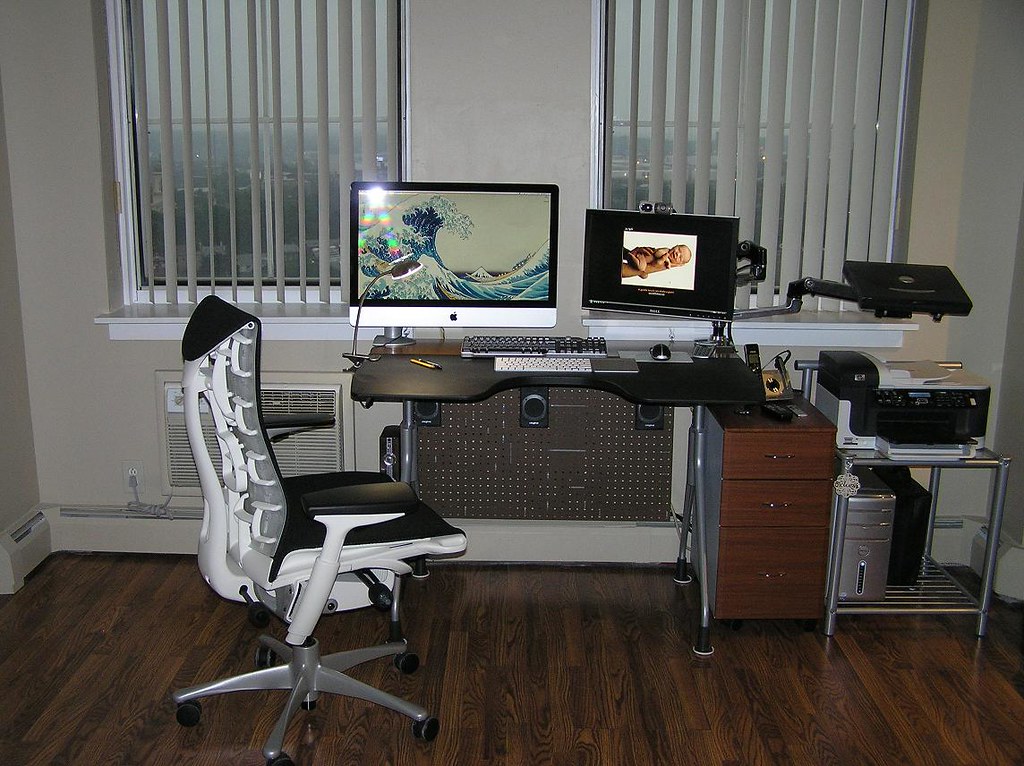
That second job is where most seating advice falls apart. The standard ergonomic office chair was designed for a cubicle, not a 400-square-foot rental. So before you buy, it helps to understand how three very different seat types actually behave in a tight room.
This guide compares the traditional office chair, the kneeling chair, and the active stool across footprint, storability, posture support, and how long you can realistically sit in each. By the end you’ll know which one belongs in your space.
The Three Contenders at a Glance
Each of these seats solves the “sitting all day” problem in a different way.
- Office chair: A backrest, seat, and base on casters. Built for support and long sessions.
- Kneeling chair: An angled seat plus shin pads. Tips your pelvis forward to open the hip angle and reduce slouching.
- Active stool: A height-adjustable perch, often with a rounded or wobble base, that keeps you upright and lightly moving.
The right choice depends less on which is “best” and more on your body, your tasks, and how many square feet you can spare.
Footprint and Storability
In a small room, the floor is your most valuable surface. Here’s how the three compare.
Office Chair
The office chair has the largest footprint by far. A five-point caster base typically spans roughly 24 to 27 inches across, and that base doesn’t tuck fully under most compact desks. The backrest adds depth behind the seat too.
The upside: casters mean you can roll it aside instead of lifting it. The downside: it’s tall, bulky, and almost impossible to truly store. It lives where it sits.
If your desk doubles as a dining table or vanity, an always-visible office chair can dominate the room.
Kneeling Chair
A kneeling chair has a smaller and lower profile. Many models fold flat or have a slim base that slides partway under a desk. Because there’s no tall backrest, it reads as less visually heavy in a room.
Some versions include casters; others sit on a fixed rocker or static base. The rocker types are light enough to pick up and lean against a wall or tuck into a closet between work sessions.
Active Stool
The active stool is the clear winner on footprint. Most have a single round or weighted base around 14 to 18 inches wide and no backrest at all.
Lightweight and short, a stool can slide fully under a desk, get carried to another room, or sit in a corner without drawing the eye. For the smallest spaces — a dorm desk, a closet office, a kitchen-table workstation — it’s the easiest seat to make vanish.
Footprint ranking, smallest to largest: active stool, kneeling chair, office chair.
Ergonomics: Posture, Support, and Sitting Duration
Footprint gets you in the door, but the seat still has to protect your back over a full day. This is where the three diverge sharply.
Office Chair: Built for the Long Haul
A good office chair is the only one of the three designed for sustained, supported sitting. With adjustable seat height, lumbar support, and a recline, it lets your spine rest against the backrest while you work.
General ergonomic guidance suggests keeping your hips and knees at roughly 90-degree angles, feet flat, and the top of your screen near eye level. An office chair makes hitting those targets straightforward, and it’s the most forgiving choice for anyone with existing back pain.
Sitting duration: best of the three for multi-hour sessions, especially deep-focus work where you’re not getting up often.
Kneeling Chair: Open Hips, Engaged Core
A kneeling chair removes the backrest and tilts the seat forward, which rolls your pelvis and encourages a more upright, neutral spine. Many people find it discourages the slumping that creeps in by mid-afternoon.
The tradeoff is that your core and lower body do more of the work, and the shin pads bear some of your weight. That’s fine for shorter stretches but can become tiring — and hard on the knees or shins — over a long day.
Standard advice is to ease into a kneeling chair gradually and to alternate it with another seat rather than using it for eight hours straight.
Sitting duration: good for moderate sessions; better as one seat in a rotation than your only chair.
Active Stool: Movement Over Rest
An active stool keeps you perched and slightly mobile, engaging your core and letting you shift, lean, and wobble. That gentle movement can feel energizing and helps break up static posture.
But “active” is the key word. A stool offers no back support at all, so it relies on you to hold yourself upright. As you tire, posture tends to slip.
It pairs especially well with a desk you can raise, so you can alternate between perching and standing.
Sitting duration: best in shorter bursts and for active, task-switching work; least suited to long, still focus sessions.
A practical principle cuts across all three: the best posture is your next posture. No single seat is meant to be held motionless for eight hours, which is why many small-space workers keep two seats and switch.
Who Each Seat Suits
Matching the seat to the person matters more than any spec sheet.
Choose an Office Chair If You…
- Sit for long, continuous stretches most days.
- Have back pain or want maximum lumbar support.
- Value comfort and adjustability over saving floor space.
- Can dedicate a permanent spot to a larger chair.
Choose a Kneeling Chair If You…
- Tend to slouch and want a nudge toward upright posture.
- Work in moderate sessions rather than marathon days.
- Have limited floor space but still want a backrest-free, lower-profile seat.
- Don’t have knee or shin sensitivities that the pads would aggravate.
Choose an Active Stool If You…
- Have the tightest space and need a seat that fully disappears.
- Like to move, fidget, and switch between sitting and standing.
- Do varied, shorter tasks rather than hours of still focus.
- Already pair it, or plan to, with an adjustable-height desk.
How Each Fits a Small Apartment or Dorm
Beyond ergonomics, think about how the seat lives in a multipurpose room.
Office chair: Treat it as a permanent piece of furniture. Choose a compact model with a low or mesh back so it feels lighter in the space, and pick one whose base fits as far under your desk as possible. See our Best Compact Ergonomic Chairs for Small Apartments for picks sized to tight rooms.
Kneeling chair: A strong fit for renters who want ergonomic benefits without a bulky chair on display. A foldable or rocker model can lean against a wall or slide into a closet when guests arrive.
Active stool: The most flexible roommate. It tucks under the desk, moves to the couch or balcony, and adds almost no visual clutter. In a dorm, it’s often the only seat that doesn’t crowd the rest of the room.
If your decision really hinges on square footage, our Choosing an Ergonomic Chair for a Small Space: The Footprint-First Guide walks through measuring your space before you buy.
A Quick Decision Guide
Use this shortcut if you’re still torn.
- Bad back or long focus days? Office chair.
- Slouching is your main problem? Kneeling chair.
- Smallest space, lots of movement? Active stool.
- Want the most adaptable setup? Pair an active stool with a height-adjustable desk, and consider a second seat for long days.
There’s also no rule that says you must pick one. Many small-space workers keep a compact office chair for deep work and a stool that tucks away for everything else. Rotating between seats is one of the simplest ways to avoid the aches that come from sitting still.
Frequently Asked Questions
Are kneeling chairs actually better for your back?
They can help by opening the hip angle and discouraging slouching, which encourages a more neutral spine. But they shift effort to your core and legs and aren’t a cure for back pain. Ease in slowly, and treat one as part of a rotation rather than an all-day chair.
Can you really work all day on an active stool?
Most people shouldn’t. A stool has no back support and depends on you to stay upright, so posture tends to slip as you tire. It shines in shorter, active bursts — especially paired with a standing desk — not for hours of still work.
Which seat is best for the smallest possible space?
The active stool. With no backrest and a single narrow base, it slides fully under a desk and is light enough to move or store anywhere. The kneeling chair is a middle ground, and the office chair takes the most room.
Will a kneeling chair or stool work for a tall or short person?
Look for height adjustability, which most stools and many kneeling chairs offer. The same ergonomic targets apply: aim for roughly 90-degree hips and knees, feet supported, and your screen near eye level.
Is it okay to switch between seat types during the day?
Yes — and it’s often ideal. Changing posture regularly reduces the strain of sitting still. A common small-space combo is a supportive office chair for focus work plus a stool that tucks away for lighter tasks.
The Bottom Line
For a tiny apartment or dorm, the choice comes down to a trade between support and space. The office chair gives you the most comfort for long days but eats the most floor. The active stool saves the most space and keeps you moving but asks your body to do the supporting. The kneeling chair sits in between, nudging you upright with a smaller footprint.
Start by being honest about how you work — how long you sit, whether your back needs support, and how much floor you can spare. From there, the right seat, or the right pair of seats, gets a lot easier to pick.