
Best Ergonomic Chairs for Petite & Short People
TinyOfficeLab is reader-supported. We may earn a commission from links on this page, at no cost to you. As an Amazon Associate we earn from qualifying purchases.
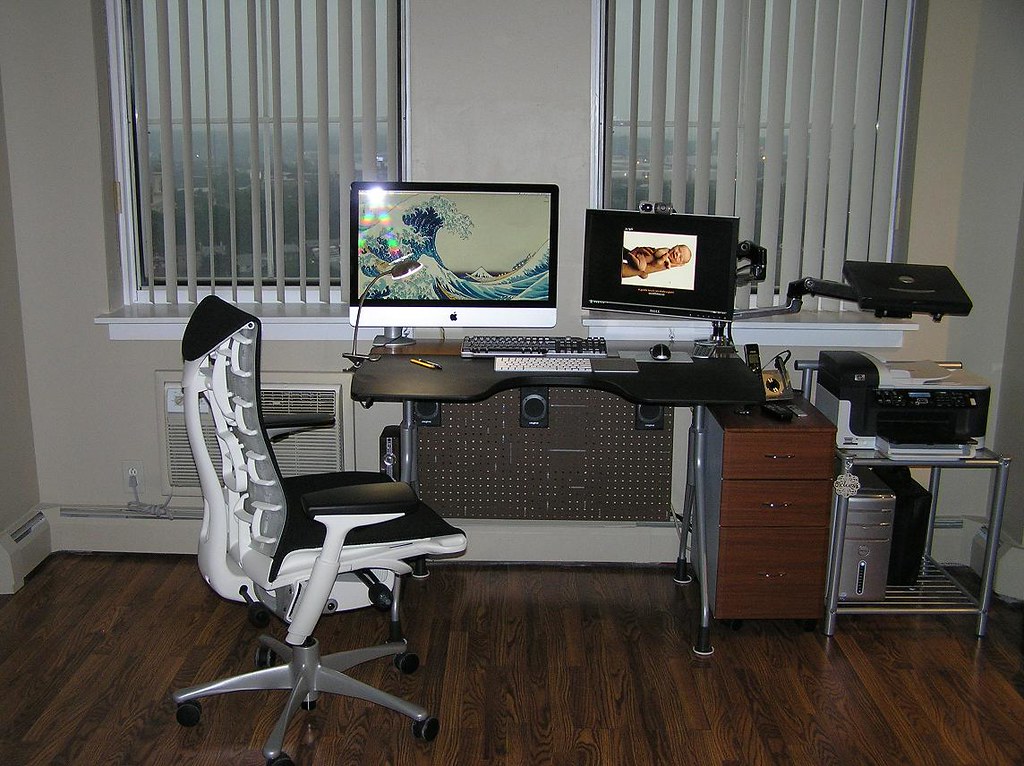
If you’re under about 5’4″ and your office chair leaves your feet dangling, the back of your knees aching, or your lower back unsupported, the problem usually isn’t you. It’s the chair.
Most “ergonomic” office chairs are designed around an average-height adult. For shorter and petite bodies, that average is too tall and too deep — which quietly undoes every ergonomic feature you paid for.
The good news: a small handful of measured specs separate a chair that fits from one that fights you. And because chairs sized for shorter bodies tend to be more compact, they’re a natural fit for apartments, rentals, and tiny home offices too.
This guide is fit-first. We’ll cover why standard chairs fail short users, the exact numbers to look for, how to measure yourself in two minutes, and how to choose a chair that fits both your frame and your floor space.
Why Standard Office Chairs Fail Shorter People
A chair can have lumbar support, a mesh back, and a dozen levers — and still be wrong for you. Here’s where the mismatch usually happens.
The seat sits too high
This is the big one. If the seat’s lowest height setting is still too tall, your feet can’t rest flat on the floor. Your thighs angle downward, pressure shifts to the back of your thighs, and your feet either dangle or perch on the chair base.
The fix many people reach for is a footrest. That works, but it’s a patch — and in a small room it’s one more thing on the floor. A chair with a genuinely low minimum seat height solves the problem without extra gear.
The seat is too deep
Seat depth is the distance from the backrest to the front edge of the seat. If it’s too deep for your legs, you face a no-win choice: sit back and the seat edge digs into the back of your knees, or sit forward and lose all contact with the backrest (and its lumbar support).
Shorter people usually have shorter upper legs, so standard seat depth is a frequent culprit.
The backrest and lumbar curve are aimed too high
Lumbar support only helps if it lands in your lumbar curve. On a tall chair scaled for a tall person, the built-in lumbar bump can sit too high — pressing into your mid-back instead of supporting your lower back.
The armrests don’t drop low enough
If armrests can’t lower far enough, your shoulders shrug up to reach them, or you ignore them entirely. Either way you lose the shoulder and neck relief good arms are supposed to provide.
None of these are exotic problems. They’re all about dimensions. Which means you can shop for them with a tape measure.
The Key Measured Criteria (What Actually Matters)
When you strip away the marketing, fit for shorter bodies comes down to a few numbers. Prioritize these over brand names, color options, or feature counts.
1. Low minimum seat height
This is the single most important spec for petite users. You want a seat that drops low enough that your feet rest flat on the floor with your thighs roughly parallel to the ground.
Standard guidance: aim for a seat height that lets your feet sit flat with knees at roughly a 90-degree angle. Many standard chairs bottom out around the mid-range of seat heights — too high for shorter legs. Look specifically for chairs that advertise a lower-than-average minimum seat height, sometimes marketed as “petite,” “small,” or “low” versions.
For reference, several of our picks below — like the Herman Miller Aeron Size A — publish a minimum seat height under 15 inches, well below the typical 17-inch floor on standard chairs.
2. Shorter (or adjustable) seat depth
You want to be able to sit with your back against the backrest while keeping two to three finger-widths of clearance between the front seat edge and the back of your knees.
Two ways to get there:
– A chair with a naturally shorter seat pan.
– A chair with an adjustable seat depth (a slider that moves the seat forward/back).
Adjustable depth is ideal because it grows or shrinks with you, but a fixed shorter seat works well if it matches your measurements.
3. Backrest and lumbar support that fit a shorter torso
Look for adjustable lumbar support — ideally height-adjustable, so you can move the support into your actual lower-back curve rather than hoping it lands there. For petite frames, a backrest that isn’t excessively tall also helps the support sit where you need it.
4. Adjustable arms that lower far enough
Armrests should support your forearms with your shoulders relaxed and elbows at roughly 90 degrees. For shorter users, the key is how low the arms go and whether they move inward (width-adjustable) so they’re not splayed out too wide. Chairs like the Sihoo M57 use 3D armrests that move up/down, forward/back, and pivot inward.
5. Appropriate overall scale
A chair built for a smaller body is usually physically smaller — a smaller seat, a less towering back, a tighter footprint. That’s a feature, not a compromise, especially if your “office” is a corner of a studio apartment.
How to Measure Yourself (Two Minutes, No Special Tools)
You don’t need to memorize ergonomics. You need three of your own numbers. Sit in a chair where your feet are flat on the floor and your knees are bent at about 90 degrees.
Popliteal height (your ideal seat height)
The popliteal height is the distance from the floor to the back of your knee — specifically the soft crease where your lower leg meets your thigh, while seated.
Measure from the floor straight up to that crease. This number is your target seat height. You want a chair whose seat can drop to at or just below this measurement so your feet rest flat.
A quick tip: take the measurement while wearing the shoes you usually work in, and measure both legs — most people are slightly uneven, so use the larger number as your ceiling.
Buttock-to-popliteal length (your ideal seat depth)
While still seated, measure from the back of your hips (where your backside meets the backrest) to the back of your knee.
Subtract roughly an inch or two from this number — that’s your target maximum seat depth. A seat deeper than this will press into the back of your knees.
Elbow height (your arm and desk reference)
With your upper arms relaxed at your sides and elbows bent to 90 degrees, measure from the seat surface up to the bottom of your elbow. This tells you how low your armrests need to go.
Write these three numbers down and bring them shopping. A chair’s spec sheet should list seat height range, seat depth, and armrest height range — match them to your numbers and most of the guesswork disappears.
How to Set Up an Ergonomic Desk in a Small Apartment
Our Picks for Petite and Short Users
Because fit is personal, we organize picks by the problem they solve rather than crowning one universal winner. Match the category to whichever criterion is hardest for your body. All specs below are drawn from manufacturer spec sheets and retailer listings — we haven’t sat in every chair, so we’ve stuck to published dimensions and the patterns owners report. Always confirm the current seat-height range on the listing before you buy, since brands occasionally revise specs.
Best overall for short users: Steelcase Leap V2
The Leap V2 is the chair most often recommended for shorter bodies because it hits the fit numbers without resorting to a niche “petite-only” line. Its seat drops to a 15.5-inch minimum seat height, and the seat pan slides to a 15.7-inch minimum depth — both well below standard. The four-way adjustable arms move down low and inward (roughly a 12.75-inch minimum width), and the lumbar support rides low on the backrest, which suits a shorter torso. It’s an investment, not a budget chair, and it’s typically sold through office-furniture dealers rather than Amazon — the refurbished market is a common way owners bring the cost down.
- Best for: A do-everything ergonomic chair that fits a shorter frame without compromise.
- Key specs: Min seat height ~15.5″; adjustable seat depth to ~15.7″; four-way adjustable arms; low-riding adjustable lumbar.
Search the Steelcase Leap V2 on Amazon
Best for the lowest seat height: Herman Miller Aeron (Size A)
The Aeron comes in three sizes, and Size A is the small one — sized by Herman Miller for people roughly 4’10” to 5’4″. It posts the lowest minimum seat height of any chair here at 14.75 inches (range 14.75″–19″), which is what makes it the standout for users whose feet never reach the floor. The seat depth is a fixed 16 inches, the arms are fully adjustable and pivot inward, and the famous suspension mesh means no foam to compress. Note the seat depth is not adjustable, so check it against your buttock-to-popliteal measurement first. Adjustable lumbar (PostureFit) is available as an upgrade on some configurations.
- Best for: Very petite users (near 5’0″) who need the seat to go as low as possible.
- Key specs: Min seat height 14.75″; fixed seat depth 16″; fully adjustable inward-pivoting arms; optional adjustable lumbar.
Herman Miller Aeron Size A on Amazon
Best petite-specific design: Neutral Posture XSM
If you’ve tried “regular” adjustable chairs and still can’t get comfortable, the XSM is built from the ground up as an extra-small ergonomic chair. It pairs a 15.75-inch minimum seat height with a seat that adjusts down to a 15.5-inch depth, and it goes further than most on the arms — five-way adjustable with a notably narrow 13.5-inch minimum width, so they don’t splay out past a smaller torso. Lumbar is fully adjustable. It’s a specialty chair sold mainly through ergonomic dealers rather than big-box retail.
- Best for: Petite users who need maximum adjustability and narrow arms that come in close.
- Key specs: Min seat height 15.75″; adjustable seat depth to ~15.5″; five-way adjustable arms (13.5″ min width); fully adjustable lumbar.
Search the Neutral Posture XSM on Amazon
Best for small spaces and renters: Sihoo M57
For a studio or rental, the M57 is a sensibly scaled full-mesh chair that Sihoo optimizes for users about 5’0″ to 5’8″. The mesh back keeps the visual footprint light rather than towering, the lumbar support adjusts both up/down and in/out so you can move it into a shorter back’s curve, and the 3D arms move up/down, forward/back, and pivot inward. Owners generally praise the breathability and adjustability for the price; a few note the seat foam is firm. Confirm the published seat-height range against your popliteal measurement, as its minimum sits a little higher than the dedicated petite chairs above.
- Best for: Renters and small rooms wanting a compact, light-looking chair that still adjusts for a shorter frame.
- Key specs: Optimized for 5’0″–5’8″; ~18″ seat depth; two-way adjustable lumbar; 3D adjustable arms; full-mesh, compact profile.
Best Small-Footprint Desks for Tiny Apartments
Best value that still fits: Sihoo M59AS
The M59AS is Sihoo’s chair marketed specifically at petite users, sized for people roughly 4’11” to 5’6″. It keeps the things that matter — adjustable seat height, 3D flip-up armrests that come down and out of the way, and a dual-section backrest with adaptive lumbar support that tracks your lower back. It’s the easiest pick here to buy outright on Amazon at a mid-tier price rather than premium-office money. As with any value chair, confirm the current seat-height range on the listing against your own popliteal number before committing.
- Best for: Shoppers who want a petite-marketed chair available on Amazon without spending office-furniture prices.
- Key specs: Sized for 4’11″–5’6″; adjustable seat height; 3D flip-up armrests; dual-section back with adaptive dynamic lumbar.
Worth considering: an active or kneeling alternative
Some shorter users find a kneeling chair or a smaller active stool sidesteps seat-height issues entirely, since the body angle changes and your weight shifts onto your shins. These aren’t for everyone or for all-day use, and there’s an adjustment period — but they’re space-efficient and many models adjust low enough for petite users. Look for one with an adjustable height range and casters or fold-flat storage if floor space is tight.
Shop kneeling chairs on Amazon
How to Test Fit at Home (Before the Return Window Closes)
Specs get you close. A quick at-home check confirms it.
- Feet flat: With the seat at its lowest, can your feet rest flat on the floor with thighs roughly parallel to the ground? If not, the seat is still too high.
- Knee clearance: Sit all the way back. Can you fit two to three fingers between the seat edge and the back of your knees? If it’s tight, the seat is too deep.
- Back contact: With your back against the backrest, does the lumbar support land in your lower-back curve — not your mid-back?
- Relaxed shoulders: Rest your forearms on the arms. Are your shoulders relaxed, not shrugged up or splayed out?
If a chair fails two or more of these, return it. A chair that doesn’t fit won’t grow on you.
Frequently Asked Questions
What seat height should I look for if I’m short?
Measure your popliteal height (floor to the back of your knee while seated) and look for a chair whose seat can drop to roughly that number or just below. That lets your feet rest flat. The exact figure is personal, which is why the measurement matters more than any single “recommended” number.
Can’t I just use a footrest instead?
You can, and a footrest is a reasonable fix if you already own a chair you otherwise like. But it adds clutter in a small room and doesn’t solve a seat that’s also too deep. A chair that fits from the start is the cleaner solution.
Are “petite” or “small” labeled chairs worth it?
Often yes — a dedicated petite or small size is one of the most reliable signals that a chair was scaled for a shorter body, usually with a lower seat and a shorter pan. Still confirm the actual numbers against your measurements, since labels vary by brand.
What if I’m short but also need the chair to fit a tight space?
This overlap works in your favor. Chairs sized for shorter bodies tend to be more compact overall, so the same model often solves both problems. Just check the chair’s overall dimensions and footprint against your available floor space.
Do I need adjustable arms?
For most people, yes — adjustable arms that lower far enough let you rest your forearms with relaxed shoulders. If budget forces a trade-off, prioritize a correct seat height and depth first; you can adjust your desk and posture more easily than you can fix a seat that’s too tall.
How do I protect my floors and deposit?
Use a chair mat under casters on hard floors, or look for floor-safe (blade or soft) casters. A mat also makes rolling easier and is easy to remove when you move out.
Renter-Friendly Home Office Setup Ideas
The Bottom Line
For petite and short users, the right chair isn’t the one with the most features — it’s the one with the right dimensions. Measure your popliteal height, your seat-depth length, and your elbow height, then shop those numbers: a low minimum seat height, a shorter or adjustable seat depth, fitted lumbar support, and arms that drop low enough.
Get the fit right and the ergonomics follow — in a footprint that fits your tiny office and your security deposit.